The Real Math Behind Why Slot Players Keep Spinning
Ask ten slot players why they play and you'll get ten answers. "It's relaxing." "My dad played the same...


You've seen the screenshots. Some guy turns $20 into $20,000 on a 10,000x slot hit, and suddenly everyone thinks they're one spin away from retirement. Here's the uncomfortable truth: that guy got lucky. You might too, but if you're building any kind of long-term approach to iGaming, luck is the worst possible foundation. The players who actually survive—and occasionally thrive—treat this like a craft, not a lottery ticket. They understand variance, they know their expected value, and they don't chase losses at 3 a.m. This isn't about killing the fun. It's about making sure the fun doesn't kill your bankroll.
Let's start with the most popular vertical: slots. The house edge on most modern video slots sits somewhere between 2% and 10%, depending on the game and the casino's configuration. That means for every $100 you cycle through, you're expected to lose $2 to $10 over the long run. Skill doesn't change that. No hot streak, no pattern, no "due" machine. What you can control is variance—the size and frequency of payouts relative to your bet.
High-volatility slots like Money Train 3 or San Quentin can go hundreds of spins without a meaningful hit, then explode for 5,000x. Low-volatility games like Starburst or Blood Suckers pay small amounts frequently. Neither is "better." They serve different purposes. If you have a $50 bankroll and want a couple hours of play, low volatility is your friend. If you're chasing a headline win with money you can afford to lose entirely, high volatility is the only logical choice.
Blackjack is the only mainstream casino game where a skilled player can consistently reduce the house edge to under 1%, and with advanced techniques—though not card counting online, which is largely dead due to continuous shuffling—you can get close to 0.5% with perfect basic strategy. That's a massive difference from slots. But "basic strategy" isn't optional. Guessing is expensive.
Take a hard 16 against a dealer's 10. Most casual players hit because it feels desperate to stand. Basic strategy says hit. You'll lose either way more often than not, but hitting loses less over 100,000 hands. That's the entire game: making the least-bad decision repeatedly. The same logic applies to baccarat, where betting the banker (with a 1.06% house edge after commission) is statistically superior to betting the player (1.24%) or tie (14.4%). It's boring. It works.
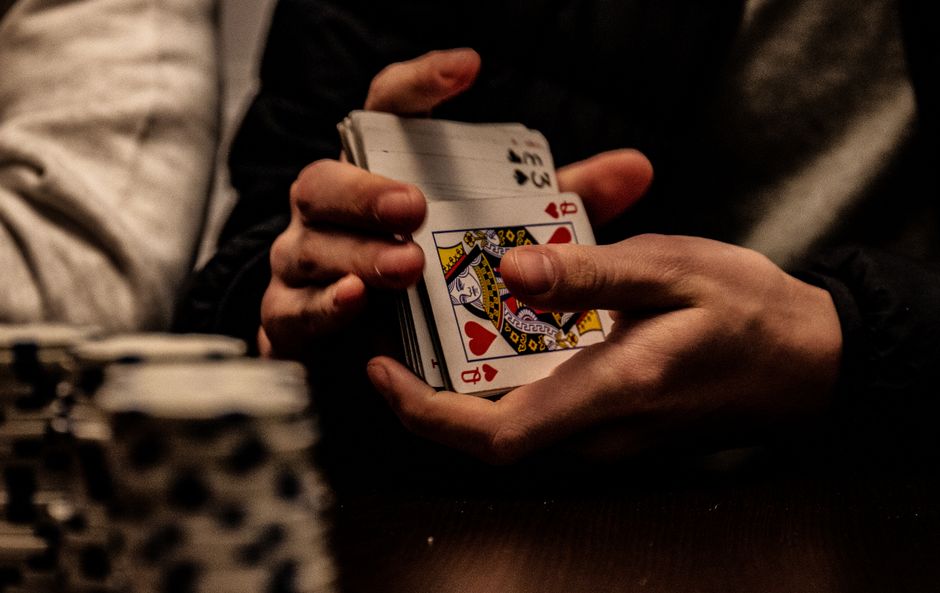
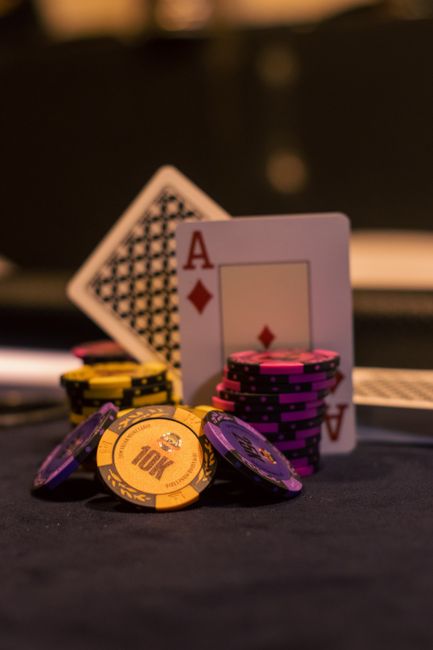
Poker is fundamentally different. You're not betting against the casino; you're betting against other players. The house takes a rake, but your edge comes from exploiting opponents' mistakes. That's why poker is the most skill-intensive vertical in iGaming—and the most brutal for people who don't study.
The single biggest mistake micro-stakes players make? Playing too many hands. If you're seeing the flop with 40% of your starting hands, you're bleeding money. Tight-aggressive play—roughly 15% to 20% of hands in full-ring games—is the baseline for profitability. From there, you adjust based on table dynamics. Loose-passive tables? Value bet relentlessly. Tight-aggressive tables? Bluff less, pick better spots.
Position is everything. On the button, you can play almost twice as many hands profitably compared to early position. Why? Because you act last on every street. Information is leverage. Use it. If this is new to you, สล็อต is a sensible next read.
Casino bonuses are marketing tools, not free money. That's fine—they can still be +EV if you understand the terms. The key metric is expected value after wagering. Here's a simple formula: (Bonus amount) minus (Wagering requirement × House edge). If a $100 bonus comes with 30x wagering on slots with a 4% house edge, your expected loss during wagering is $100 × 30 × 0.04 = $120. That's a negative EV bonus. You'd be better off depositing $100 with no bonus and playing your normal game.
Compare that to a $100 bonus with 10x wagering on blackjack (0.5% house edge): $100 × 10 × 0.005 = $5 expected loss. That's a +$95 theoretical value. Those bonuses exist, but they're rare and often capped or game-restricted. Read the terms. Always.
Tilt is the silent bankroll killer. You lose three hands in a row, so you double your bet to "get it back." You're now playing with scared money, making emotional decisions, and the house edge just got a lot steeper because you're no longer thinking clearly. Every experienced player has been there. The difference is they set hard stop-losses before they start. If you're down 20% of your session bankroll, you walk away. No negotiation.
The same goes for winning. Hitting a 500x slot win feels incredible. It also triggers the "house money" fallacy—the idea that winnings aren't real money. They are. That $500 is yours the moment it hits your balance. Treat it like a deposit you just made, not a free roll.
The gap between a recreational player and a winning one isn't secret knowledge. It's discipline. It's knowing that slots are entertainment with a negative expected value, that blackjack rewards precision, that poker punishes laziness, and that bonuses are only as good as their terms. You don't need to be a math genius. You need to respect the math, set limits, and never, ever chase. The casino has an edge built into every game. Your job is to shrink that edge as much as possible—and to know when walking away is the best bet you'll make all night.
Ask ten slot players why they play and you'll get ten answers. "It's relaxing." "My dad played the same...
You've just watched a streamer turn a $2 spin into $18,000 on a slot you've been grinding for weeks. You...
There's a specific kind of sadness in watching a slots player sit down at a poker table for the first...